Showing posts with label DXCC. Show all posts

April 20, 2018

St. Brandon - How beautiful can a check mark be?

Last edited:

St. Brandon is an archipelago located about 430 km northeast of Mauritius in the Indian Ocean. St. Brandon (also known as the Cargados Carajos Shoals) actually is a coral reef consisiting of about 20 to 50 (depending on who you ask and on seasonal storms and related sand movement) sandbanks, shoals and islets. It's measuring 50 km from north to south and about 5 km in width. There are 5 island groups and 22 islands and shoals are named. The archipelago is low lying and prone to substantial submersion during severe weather. The archipelago has a small transient population, mainly fishermen, of about 63 (a census of 2001, according to Wikipedia). The archipelago is quite elusive, and even on the internet, the information found isn't in abundance. In my The Times Atlas of the World compact edition, the archipelago isn't shown.

St. Brandon (3B7) forms a separate DXCC entity. It shares the same entity with Agalega Island (3B6) and together are known as the DXCC entity Agalega & St. Brandon Island.

Between April 5th and April 17th, 2018 a group of 8 French hams went on DXpedition to the South Island of St. Brandon. The callsign of the DXpedition was 3B7A.
Before the 3B7A operation, St. Brandon was #27 on the DXCC most wanted list of Club Log and the attention for the DXpedition and the pile ups were huge. The last DXpeditions to St. Brandon were in 2007 and 1998.


The QTH of the 3B7A DXpedition on St. Brandon. Photo courtesy of the 3B7A website. Check the site for more stunning photographs!

During the DXpedition I had little time to spend on the amateur radio hobby, and soon the end date of the DXpedition came in sight. I had managed to hear them on 40m CW one night with very good signals, but the pile up was huge (probably extending over a range of more than 10 kHz), so I decided to call it a day, as I was also supposed to make an early start the next morning at my QRL. Then on the 14th I heard them on 17m CW with fair signals, but unfortunately I again didn't manage to get through the pile up.

I thought my chances of working them on 17m CW would be fairly high, but although I do get my HyEndFed 40/20/10 tuned for this band, ofcourse it isn't optimal, the antenna being designed for 40, 20, and 10 only. So in the morning of April 15th I quickly made a dipole wire antenna and cut it for resonance at the CW portion of the 17m band. I lowered the HyEndFed and raised the dipole, and I anxiously awaited for 3B7A to get on the air again on 17m CW. But instead they were active on 17m in SSB only. But lo and behold, with the dipole I could also here them in SSB (I checked, I couldn't with the HyEndFed)! I tried to get through the pile up, but to no avail.

I wanted to work St. Brandon so much, and I was so disappointed I didn't manage to put them in the log. I had read on their website that the team would leave by boat for Mauritius in the morning of April 16th, so I knew no other chances would be there anymore. It surprised me, because the DXpedition was announced to last until April the 17th.

But then on April 17th, I had just arrived home from work, I checked the DX cluster and saw that 3B7A was still active on 17m SSB! It turned out that not the whole team had left St. Brandon; two of them, F4FET and F4HAU, had stayed behind and would follow later. They would leave the island by boat on Wednesday morning, April 18th, and until that time would remain sporadically active from the island.

Ok, this definitely was my last chance! But it has been a while since I worked real DX in SSB (most of the DX I work is in CW these days). The solar minimum had sort of slowly made me believe that in times like these it's impossible to work (or even hear) real DX in SSB with just a wire antenna. I quickly connected the 17m dipole though and heard the weak SSB signals of 3B7A. I turned on the pre-amplifier of my rig to it's highest stage. The noise level went up accordingly but with some tweaking of my FT-991's noise reduction, a workable signal came out of the speaker.

3B7A was listening 5 up, which was a sign that apparently the pile up wasn't as big as during previous times, during which the DXpedition was listening 5 to 10 up. I could also tell by the way the operator was calling that the pile up was not big. So I started "shouting out" my callsign, and at one point I heard the operator coming back with a nice French accent "Mike Delta Juliett". Yesss! Please don't loose me now! It took some calls, but then finally the operator had my callsign complete. I did it! Thank you 17m dipole!

Less than a half hour later the 3B7A DXpedition made their last QSO and went QRT! I'd made the contact in the nick of time! The last part of the log wouldn't be uploaded to Club Log until F4FET and F4HAU would be safely back in Mauritius, so my patience was again put to the test, but today I checked and seeing the result I thought to myself: "how beautiful can a check mark be?"


Results for PA7MDJ in the 3B7A log in Club Log. The notice about the last two days missing in the log had not been removed yet.

St. Brandon is DXCC entity 220 for me.


See also:

http://www.saintbrandondx.com/en/
https://dx-world.net/3b7a-st-brandon-dxpedition/
https://en.wikipedia.org/wiki/St._Brandon

June 01, 2017

Amateur Radio in the Autonomous Monastic State of the Holy Mountain

Last edited: 06.06.2017

Latest news 02.06.2017 - Apparently George Vlachopoulos SV1RP during the WPX Contest was not active from Mount Athos but from his "alternative shack" in Giannitsa in northern Greece. Read more in my blog entry of June 2nd, 2017.

Last weekend during the CQ World Wide WPX CW contest, I finally managed to make my first ever contact with Mount Athos! Ok, "sort of", as you will read later on.

Mount Athos forms a separate DXCC entity, and let me tell you, it won't be easy to find one that's more mysterious, mystical, magical, obscure, and controversial! Mount Athos is a mountainous peninsula in northeastern Greece stretching out for about 50 km into the Aegean Sea, its width varying between 7 and 12 km, and its highest point reaching about 2,000 m. Although land-linked, the isolated, rugged region is practically only accessible by boat. Spread out over the peninsula are 20 Eastern Orthodox monasteries. Alhough considered part of Greece, Mount Athos is a self-governed, autonomous region, known officially as the Autonomous Monastic State of the Holy Mountain. It's commonly referred to simply as the "Holy Mountain", or "Agion Oros" in Greek. Mount Athos is governed by the "Holy Community" which consists of the representatives of the 20 Holy Monasteries.

Map of Mount Athos showing the locations of the 20 monasteries. Click to enlarge. (source)
Part of Mount Athos peninsula seen from the air (source)
Travelling to Mount Athos is like travelling back in time; for over 1,000 years, practically nothing has changed in the "Garden of Virgin Mary" as the Monks call the territory. The monasteries of Mount Athos were founded many centuries ago, some of them have a history going back even more than a 1,000 years, and many of them are fortified with thick walls and towers that had to keep pirates at bay. Mount Athos still is on the Julian calender, which means their date runs thirteen days behind to that of the rest of the world. The number of daily visitors is restricted, and a special limited-period access permit has to be obtained before entering the Monastic State. Visitors have to abide by a dress code and rules including not smoking. Women and children are not allowed to enter the territory at all, and even female animals are banned from the mountain (except for female insects, female songbirds, and female cats)!

One of the 20 monasteries of Mount Athos. About 2,000 monks call Mount Athos their home. (source)
Another Mount Athos monastry. A list of all monasteries and photos of them can be found on Wikipedia. (source)
Of course a contact with such a unique DXCC entity has always been much sought after by ham radio operators around the world. Luckily, since a couple of decades, Mount Athos has had its own resident amateur radio operator, the famous Monk Apollo SV2ASP/A, operating from the Docheiariou monastery. This is quite a unique situation for such a small and special DXCC entity!
Monk Apollo first came in contact with amateur radio in the middle of the 1980s when his monastery had remained without telephone for over five months and during which a medical emergency occured. When a doctor heard the story, being a radio amateur himself, he suggested somebody at the monastery would become a radio amateur operator, in order to guarantee continued communications during an emergency.
By the end of the 1980s Monk Apollo had obtained his amateur radio licence. But the working days at the monasteries of Mount Athos are long and hard, Monk Apollo's free time is scarce, and his time spent on amateur radio is little. The chances of catching and working Monk Apollo on one of the ham bands are quite slim.
So, not surprising, for many years radio hams have been trying to set up DXpeditions to the Holy Mountain to activate the much sought after entity on the ham bands. In the past, a group of Greek radio amateurs with the help of Monk Apollo were granted permission, but all applications thereafter by other radio amateurs were denied. There have been some hams operating from Mount Athos however, but their operations were "secret" and declared illegal by Monk Apollo and the Holy Community, as there might have been permission from one of the monasteries, but not from the Holy Community! According to Greek law, to operate a ham station from Mount Athos, a written permission is needed from the Mount Athos Holy Community.

Monk Apollo, SV2ASP/A (source)
Of the various hams that were operating from Mount Athos "illegally", the most notorious probably is DXpeditioner Baldur Drobnica DJ6SI. Just Google for DJ6SI and Mount Athos and you'll find plenty more on this particular episode of the Mount Athos ham radio history. Although the operation of DJ6SI from Mount Athos in 1991 was declared illegal by Monk Apollo, it did get DXCC validated!
In May of 2015 a group of Latvian hams were on their way to Mount Athos to get on the air from the Monastic State as SV2/YL7A. They claimed to have received oral permission for their ham radio activities from one of the monasteries. The group had permits to enter the Monastic State as pilgrims, but as soon as Monk Apollo and the Holy Community found out about their real intentions, access to Mount Athos was denied, the group had to return home, and the DXpedition was cancelled.

QSL card from the controversial SY/DJ6SI DXpedition of Baldur Drobnica (source)
The latest episode in the history of "illegal" ham radio operation on Mount Athos is the one of Greek radio amateur George Vlachopoulos SV1RP which back in June 2015 operated from the Koutloumousiou monestary using the callsign SV2/SV1RP/A (1) and SV2/SV1RP/T. The /A is usually added when an amateur station is operated from an alternative location, but here is added as it traditionally has been for operations from Mount Athos. The /T stands for "Training". According to Greek law, under supervision of a licenced ham operator, and with the /T added to his callsign, people without a ham licence are allowed to use his ham radio station for training purposes. Vlachopoulos claimed to have been legally operating from Mount Athos training several of the resident monks in amateur radio practice, most noticeably Monk Iakovos who as a result in 2015 obtained his amateur radio licence and has been operating from Mount Athos since with the callsign SV2RSG (No /A added, read the story on his qrz.com page). Monk Iakovos is a permanent resident of the Koutloumousiou Monestary. Vlachopoulos claimed he was in the possession of official documents which should give the operation DXCC approval, but as far as I know, both him and Monk Iakovis so far seem to have failed in getting DXCC validation.

Monk Iakovis is presented his radio amateur licence in the presence of the Koutloumousiou Monastery abbot and George Vlachopoulous, SV1RP (first from the right) (source)
My contact this weekend was with SV2/SV1RP/A on 20m CW. So it seems George Vlachopoulos again has travelled to Mount Athos. At this time I don't have all the details on the operation, but it's reported on the DX World site that Vlachopoulos again was active from the Koutloumousiou Monestary, from which he also got permission for the operation again. I'm curious how the story will unfold this time, but I bet this is another "secret" operation without the authorization of the Holy Council. At the moment I made the contact, I was unaware of the "troubled" ham radio history of Mount Athos, which I first learned about when doing research for this blog entry. Also I was under the impression I was working a 100% legal Mount Athos activation. The contact most likely will not give me DXCC credit for Mount Athos, but my signals were there, in that magical place (just look at the photos!), I made contact with one of Mount Athos' monasteries, and I'm thrilled about it!

Olive trees at Koutloumousiou Monastery, the QTH of SV2/SV1RP/A (source)
After the "illegal" operation on Mount Athos of DJ6SI, now more than two decades ago, and other ham operators which, in the words of Monk Apollo, "tried to fool the Monks", the Holy Council and Monk Apollo still seem to hold a grudge, and all applications for amateur radio activities from Mount Athos are structurally denied. Some accuse Monk Apollo of swinging a big hammer in the Holy Community Council and at the DXCC desk, and say he has built for himself on Mount Athos an amateur radio monopoly which he tries to protect.
But Mount Athos is more than just a much coveted, exotic DXCC entity alone. It's also a sanctuary of peace, a sacred place, a different world where time stood still, a home where Monks lead a simple life, away from the hectic, modern, and complicated lifes most of us live today. And such a place is fragile, and maybe that's the only thing Monk Apollo is trying to protect.
What puzzles me though is that resident Monk Iakovos still hasn't managed to obtain the required documents for DXCC approval, but I don't know the whole story here, and thus for now I'll have to refrain on any further comments on it.

The attitude of the Holy Community and Monk Apollo towards guest ham operators, with which they've practically closed the DXCC entity to non-resident ham operations, and the resulting voices raised by some in the ham community to therefore better delete Mount Athos as a DXCC entity, lead to some controversy of which good examples can be found in the discussion threads on eHam as linked to below. There's also much info on the activations of DJ6SI and SV1RP in there.

I for sure hope Mount Athos will never be deleted from the DXCC list, and hopefully with some luck and a lot of DX Cluster watching, I'll someday get the chance to work the elusive Monk Apollo himself. And to be honest, I wouldn't like to see it any other way; some places should remain shrouded in mystery, some places on the ham bands should remain shrouded in elusiveness.

You can listen to a recording of my contact with SV2/SV1RP/A below.


Addendum 06.06.2017
(1) I'm not sure but I believe the SV2/SV1RP/A callsign in 2015 never was used on the air, only the SV2/SV1RP/T callsign. Vlachopoulos' 2015 QSL card does mention the /A though.

QSL card SV2/SV1RP/A/T (source)

See also:

https://en.wikipedia.org/wiki/Mount_Athos
http://www.ouranoupoli.com/athos/athos.html
http://www.dailymail.co.uk/travel/travel_news/article-3385149/The-striking-images-Mount-Athos-Greece-women-children-banned-female-animals-forbidden.html
http://www.eham.net/ehamforum/smf/index.php/topic,103726.0.html
http://www.eham.net/ehamforum/smf/index.php/topic,84717.0.html
http://www.eham.net/ehamforum/smf/index.php/topic,104465.0.html
http://www.qsl.net/sv2tx/athos_dxpedition.html
http://herc-hastings.org.uk/the-story-behind-the-card-series-2-no-1-mount-athos/
http://hamgallery.com/qsl/country/MountAthos/dj6si.htm
https://n6pse.wordpress.com/2014/11/27/interview-with-baldur-drobnica-dj6si/
https://n6pse.wordpress.com/2014/08/08/a-conversation-with-monk-apollo-sv2aspa/
https://dx-world.net/a-reponse-from-monk-apollo-sv2asp-a/
http://qrznow.com/sv2aspa-the-position-of-the-holy-community-of-mount-athos-for-amateur-radio-emissions-from-athos/
https://dx-world.net/sv2-yl7a-mt-athos/
https://dxnews.com/sv2yl7a-mount-athos/
https://dx-world.net/sv2-sv1rp-a-mt-athos/
http://www.n0un.net/sv2-sv1rp-a-mt-athos-on-the-air/
http://www.dxcoffee.com/eng/2015/sv2sv1rpt-mount-athos/
http://www.southgatearc.org/news/2016/april/new_ham_at_mount_athos.htm#.WS87yrjSk1J

April 22, 2017

Franz Josef Land - A DXer's dream

Last edited: 24.04.2017

A DXer's dream! Franz Josef Land, "Strange islands lost in the Barents Sea", as the archipelago is called by the Ultima Thule blog, shown here in an iconic National Geographic photo with a polar bear on Rudolf Island (source)
All ham operators have a clear recollection of their most special and memorable contacts and moments in amateur radio. Ask any random ham for it and the stories will be coming at you non-stop. Often these special moments are related to a goal or a wish made a long time ago. Probably most hams when they start out in amateur radio, and all future hams still studying for their amateur radio licence, secretly have some goals in mind that they're going to try working towards. And once reached, the achievement, the radio contact, or the resulting QSL card or award feels like a medal for all the hard work delivered to get there, a trophy that fills the radio amateur with pride, recognizing his skills and perseverance. To me, one of these moments was working Franz Josef Land.

The much coveted QSL card from RI1FJ and the book about FJL published by the Norwegian Polar Institute.
One of my goals, or maybe it was more of a wish, or even a dream, from the beginning was making a contact with Franz Josef Land. Being a polar enthusiast, I've always been fascinated by this frozen, barren Russian archipelago at 80º northern latitude in the High Arctic. The archipelago is the closest land to the North Pole in the eastern hemisphere. Just 900 km of sea and ice separate Franz Josef Land from the top of the world. I don't know where the fascination for the archipelago exactly comes from, maybe it's the mysterious sounding name, maybe it's the photos I've seen of the beautiful, desolate Arctic landscape providing the backdrop for the shabby huts of a remote Russian weather station and roaming polar bears, or maybe it's just something undefinable.
Whatever the case, my fascination was already there in the 1990s when I bought the book shown above edited by Susan Barr and published by the Norwegian Polar Institute. I believe it's quite a rare book, as it's probably one of only a few books about Franz Josef Land published outside of Russia.

After I got my amateur licence in late 2012, the years went by with Franz Josef Land being shrouded in nothing but radio silence (1). The last time I heard a signal from Franz Josef Land was in the 1990s when I was active as a shortwave listener and had managed to receive Sergei Tsybizov R1FJZ.

QSL card from R1FJZ received for an SWL report back in 1995.
Then in 2015 the news appeared that soon Eugeny Chepur UA4RX would be active from Heiss Island, one of the islands of the Franz Josef Land archipelago, signing as RI1FJ. I was excited! In the summer of 2015 Eugeny was delivered to the island by the icebreaker MSV Mikhail Somov, but the months following, Franz Jozef Land just remained hidden in its usual radio silence. Until suddenly in the summer of 2016, not long before Eugeny would depart from the island again, spots for RI1FJ started appearing on the DX Cluster. Apparently, Eugeny had been dealing with some technical problems, which had prevented him from getting on the air until resolved late June 2016.

But propagation conditions were terrible, and when I tuned in to the spotted frequencies, mostly I could not hear the signals of RI1FJ at all, or they were too weak to be workable. On the rare occasions that the signals were good enough, I just didn't manage getting through the pile-up. Until August 1st that is, the day that luck was on my side, and in the very nick of time! RI1FJ was on 20m CW working simplex and with relatively good signals. The pile-up was big but not extremely, and there were some promising gaps in it. I started keying my callsign trying to squeeze it into the gaps, and then suddenly there it was; Eugeny had picked up my signals on that barren, frozen, mysterious land in the High Arctic, and back he came with my callsign and a signal report! After my reply, the 2-way contact was completed with a 73 from Eugeny. One of the most special 73s I ever got! What a thrill to know my signals had reached Franz Josef Land, the northernmost location I've ever made contact with. A look in the August 19 news update below from RI1FJ's QSL manager shows that indeed it was a contact made in the nick of time; Eugeny went QRT just a day later on August 2nd! How much more luck can a ham operator with just a simple wire antenna and 100 Watts ask for!?

Krenkel weather station on Heiss Island, Franz Josef Land (source)
Eugeny was active from the Krenkel Meteorological Station in grid locator LR90ao on Heiss Island. The station is built around a shallow fresh water crater lake. Krenkel Station was established in 1957/58 during the International Geophysical Year and abandoned in 2001. It was reopened in 2004 with a smaller modern station set up between the old buildings. The new station is manned year-round by about 5 persons. The old complex of buildings housed about 200 station personell and seasonal researchers.

Iceberg at Heiss Island (source)
Franz Josef Land is IOTA EU-019 , forms a separate DXCC entity, and was an ATNO for me. The archipelago consists of 191 islands. In 2012 president Putin signed a decree on a major clean-up in the Arctic, including at Franz Josef Land. Before the clean-up there was about 90.000 tons of scrap metal left at the old Soviet and Russian Polar stations on Franz Josef Land alone.

Soon after the contact, when Eugeny had arrived back on the Russian mainland, the QSO was confirmed in Clublog and in LotW. The much coveted QSL card took a longer wait though. It was already mailed to me in August 2016 but had gotten lost in the mail. QSL manager Victor Loginov UA2FM recently sent me another one at no additional charge, and it was finally received a couple of days ago. Spasibo, Victor and Eugeny!


On qrz.com the QSL manager of RI1FJ regularly posted updates on the activities of Eugeny:

-----------------------------------------------------
From qrz.com
http://www.qrz.com/db/RI1FJ
 
19 August 2016
Eugeny RI1FJ safely arrived at Archangelsk Port. His 2016 operation lasted  from 27 June 18.31 UTC to 02 Aug 2016, 16.18 UTC. No ham operation is expected from the island until probably next expedition in August 2017 - August 2018.

RI1FJ log uploaded to Clublog.org. Otherwise use OQRS form on this page.


73 de UA2FM

14 August 2016 update
Gentlemen, Eugeny RI1FJ left the island on 5-6th August. He is onboard RSV Somov, sailing home. Watch Somov route at http://194.190.129.43/ships/somov.php As soon he is on the Internet, I upload his log onto clublog.org, and everyone will be able to use OQRS form on this page as well. Please be patient, all requests will be replied! :)

73 de UA2FM


3rd July update
This afternoon I got information (thanks R6AF) that Eugeny stays on the island until end of July. After that he sails home onboard icebreaker RSV Somov. Watch Somov route at http://194.190.129.43/ships/somov.php

RI1FJ goes QRT soon after Somov arrives on the island.

73, de Victor UA2FM


2nd July 2016 update
Eugeny RI1FJ suddenly showed up on the air late June. I have no e-mail communication with the Island, as there are no post/telephone/transportation services there, but company satellite forbidden for private use. I was neither notified by Eugeny of his QRV, nor about problems he had during this season. The only thing I know, - it's him who signs RI1FJ, as many hams worked him reported this.

I do not know whether Eugeny is able to send his ADIF logs through his @winlink.org address as we did in his previous operations. I was told all steel and metal materials and equipment was removed from the island before summer 2015. Perhaps this was the reason of RI1FJ silence.

Gents, please keep working RI1FJ on the bands, but be patient with QSL requests until I establish log exchange procedure. I'll be back with more information as soon I have it.

Thanks, Victor UA2FM


December 2015 update
Dear fellows-amateurs,
Many of you asked me to update RI1FJ info. His license reissued from 01 August 2015 until 31 August 2017. To be honest, I expected that Eugeny would start his activity early August, since he came on the Heiss Island.
He works as lead of Sevmeteo weather group for 2015-2016.
After his arrival on the island, I tried to get in contact with him using non-amateur communication, to make clear why he is not on the air.
There is no direct communication with the Island. The only possibility is to send telegraph message through official Company address, that was what I did. No reply.
After that, I tried to understand the situation in other ways. The last reply I got from Sevmeteo management, is that Eugeny is alive and well, he carries out his duties, but he has no technical possibilities to be QRV.
There is no regular transport with the island until safe Arctiс Ocean navigation in summer 2016. I do not know how I can help Eugeny.
So guys, let’s hope Eugeny will solve his technical problems until the end of his 2016 employment.


July 2015 update
2015-2016 weather team is on the way from Severodvinsk to Heiss Island onboard MV Somov. Look for RI1FJ starting early August.

July 2014 update
2014-2015 season weather team delivered on the island. There are no ham operators among the crew. No permanent ham radio operation is expected from Franz Jozef Land during 2014-2015.

All 2010 - 2013 logs are uploaded to LoTW.
-----------------------------------------------------

Present day Krenkel Station (source)
Abandoned buildings at Krenkel Station (source)
FJL shown on a map of the circumpolar north.

Addendum 24.04.17
(1) I understand Eugeny was also active from Franz Josef Land during 2013 though. It may have been only sporadically, as this ARRL news item suggests, at least during the latter part of his stay on FJL, due to poor conditions. I also wasn't active in CW yet, and I didn't watch the DX Cluster as closely as I do nowadays.


See also:

https://en.wikipedia.org/wiki/Franz_Josef_Land
http://www.franz-josef-land.info/
http://ultima0thule.blogspot.nl/2012_06_17_archive.html
http://ngm.nationalgeographic.com/2014/08/franz-josef-land/richards-photography
https://thebarentsobserver.com/en/arctic/2017/03/putin-visit-arctic-clean-site

http://www.urbanghostsmedia.com/2015/06/10-abandoned-weather-stations-meteorological-bases-world/
http://www.geobotany.uaf.edu/library/reports/WalkerDA2011_yamal_dr20110103.pdf

December 10, 2016

QSL card in the Spotlight: CY9C - St. Paul Island, IOTA NA-094

Last edited: 25.07.2017

Here's a beautiful folded QSL card received recently for my 40m CW contact with the CY9C DXpedition on St. Paul Island, IOTA NA-094.


St. Paul Island lies about 25 kilometres off the northern tip of Nova Scotia, Canada on the border of the North Atlantic and the Gulf of St. Lawrence. St. Paul is a rugged island of approximately 5 kilometres long and 2 kilometres wide. The island is surrounded by rockface cliffs and is uninhabited. Due to fog and the often extreme and unpredictable weather conditions in the area, the rocky cliffs of the island in the past centuries have seen numerous catastrophic ship wrecks, and therefore the island sometimes is also nicknamed The Graveyard of the Gulf.

You can find a huge amount of information about this fascinating island on www.stpaulisland.net. On this site there's also a separate section with a "QSL Museum" with historical QSL cards of amateur radio stations having been active from St. Paul Island in the past and as recent as 2012, as well as a section with links and other information about various other CY9 DXpeditions.

(source)
(source)
The CY9C DXpedition was active from two operational sites: Atlantic Cove and Northeast Point. Actually, the Northeast Point is a separate small island of just a few acres in size and separated from the main island by a small strip of water.
According to Phil McBride, VA3QR, one of the operators of the DXpedition, my 40m CW contact was with operator K4ZLE at the Atlantic Cove site. During the DXpedition, VA3QR kept a very nice daily blog which can be found here. You can read about mysteriously disappearing chartered boat captains, logistical problems, nasty storms, blown down tents, fog systems, and the other daily events that made this DXpedition quite the challenge and adventure.

Atlantic Cove, St. Paul Island (source)
Beside a chartered boat, the CY9C team also had the luxury of having to their disposal a helicopter to transport equipment and team members to and from the island. The helicopter is owned by team member N2IEN and can be seen on the QSL card. There's no way that a boat can get equipment to the Northeast Point, so all gear for this site had to be ferried by the chopper. Also, along with gear, generator fuel, and supplies, frequently USB sticks with the log of the operators at Atlantic Cove were flown from the Atlantic Cove site to the Northeast Point where VA3QR could then upload it to Clublog via a cellular internet connection with either the Newfoundland or Nova Scotia mainland, that's not clear to me. There was no cellular coverage at the Atlantic Cove site.

Northeast Point, St. Paul Island (source)
St. Paul Island is a separate DXCC entity. It's number 72 on the DXCC Most Wanted List of Clublog (no surprise, North Korea is number 1). Do not misunderstand me, I'm glad St. Paul is a DXCC entity, and I don't want to have it changed, but I'm really curious as to why it is. The island is part of Nova Scotia, Canada, and it's relatively close to the coast of Nova Scotia and Newfoundland, so from my point of view there's not really a clear political or geographical distinctiveness. Maybe one of my blog readers can shed some light on the underlying reasons for St. Paul being on the DXCC list. Again, do not misunderstand me, I'm not promoting here to have it removed from the list, because as far as I'm concerned, the more DXCC entities the better!

Addendum 25.07.2017
The complete story, written by the expedition members themselves, can now be found here.


See also:

https://en.wikipedia.org/wiki/St._Paul_Island_(Nova_Scotia)
http://www.cy9dxpedition.com/
http://dx-world.net/cy9c-st-paul-island/

October 27, 2016

Central African Republic

Last edited:

Today I worked TL0A in the Central African Republic on 20m CW. It was an ATNO for me, and reason for a little celebration, as it's also my 200th DXCC entity in the log!


Listen here to a recording of my contact with TL0A on 20m CW.


See also:

https://en.wikipedia.org/wiki/Central_African_Republic

September 17, 2016

St. Pierre & Miquelon (IOTA NA-032) and "ATNO" explained

Last edited: 03.10.2016

After many tries, tonight I finally managed to work the DXpedition TO5FP on St. Pierre & Miquelon! I worked them in RTTY on 20m.

St. Pierre & Miquelon is an archipelago situated in the North Atlantic Ocean near Newfoundland. It's the only French territory in North America. The official currency on the archipelago is the Euro!
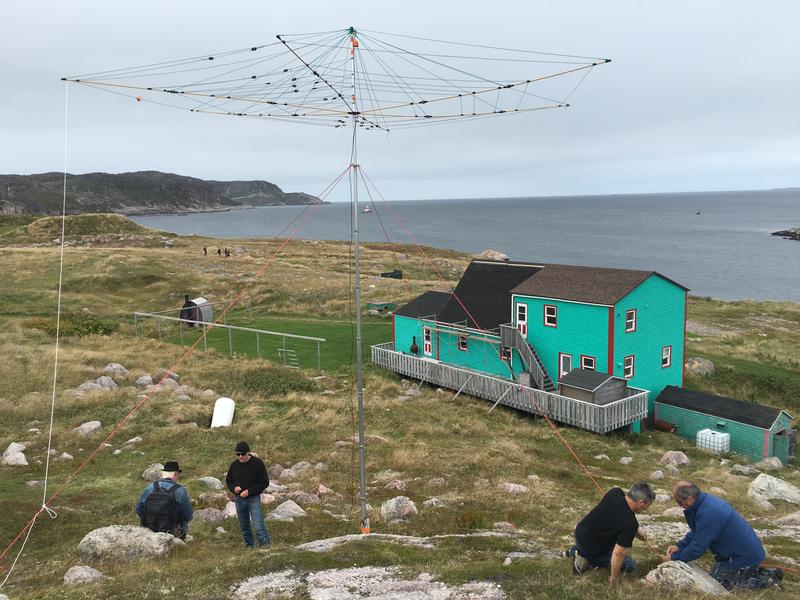
The team of TO5FP, consisting of F4HEC, F1RAF, FK8IK, and F5TMJ, is active from the islet of Ile aux Marins, close to St. Pierre Island. They will be active until September 20th.

St. Pierre & Miquelon is a separate DXCC entity, and is an ATNO* for me, bringing my total DXCC country count to 198 (mixed).

Ile aux Marins (source)


TO5FP QTH and Hexbeam antenna (source)
TO5FP is working with a real time online log which can be found at http://www.a6dx.com/QSO/to5fp/. A screenshot of the log (with PA7MDJ in the "Recent QSO" window) is shown below. Very nice!


*ATNO = acronym for "All Time New One", used by radio amateurs to indicate a brand new DXCC country worked. To the outsider it looks like just another acronym, but in fact it's the radio amateur's "Hallelujah" and is laden with emotion and excitement. Read this article here which explains pretty well what ATNO really means to the radio amateur.


See also:

http://dx-world.net/to5fp-st-pierre-and-miquelon/
http://dx-world.net/images-at-to5fp/